1997 Porsche Boxster – 10 Fast Facts
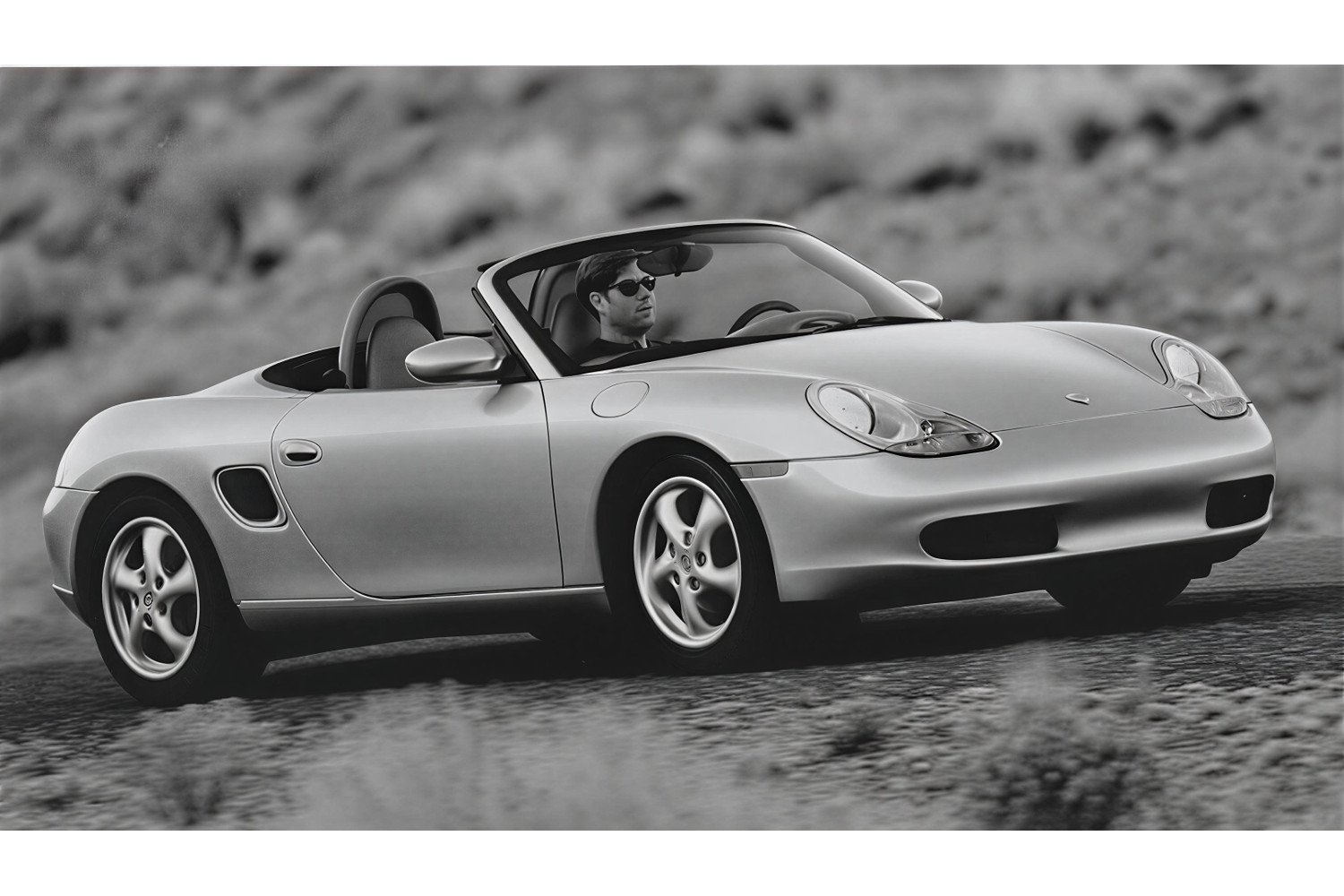
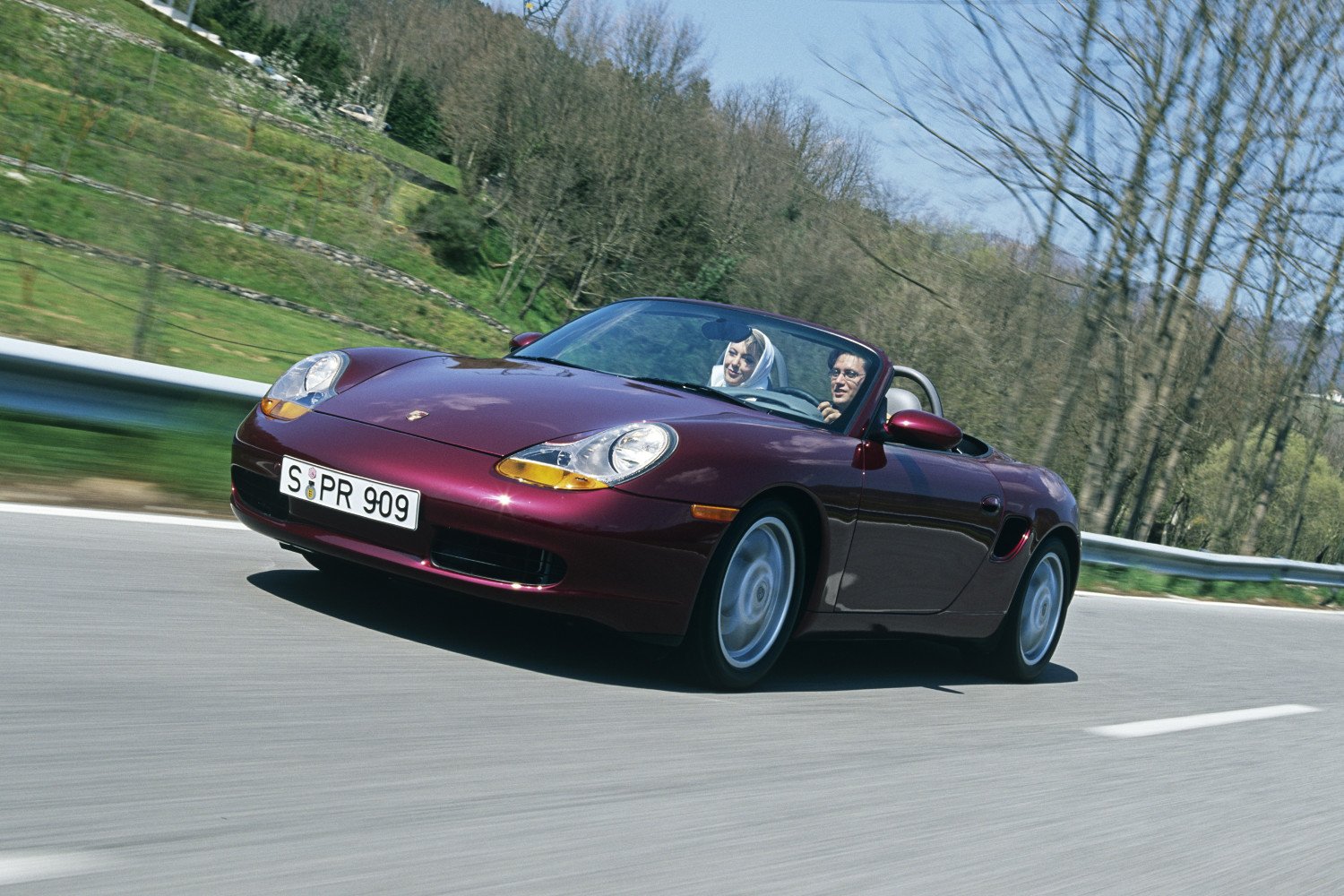
For the model year 1997, Porsche unveiled a completely new mid-engined sports car. Here are 10 fast facts about the 1997 Porsche Boxster.
1997 Porsche Boxster – 10 Fast Facts
Six-Cylinder Engine
To power the Boxster, an all new Porsche horizontally opposed, six-cylinder boxer engine was designed, to meet modern emissions, noise and fuel economy requirements. It utilises water cooling and has four-valve heads for better breathing. This 2.5-litre engine delivers maximum output of 150 kW (204 hp) at 6,000 rpm. The maximum torque of 245 Nm (181 ft-Ibs) is reached at 4,500 rpm, with more than 200 Nm (147 ft-Ibs) available between 1750 and 6500 rpm.
Five-Speed Manual
The Boxster comes with transmissions tailored to the power and performance characteristics of the 2.5-litre boxer engine. As standard, the Boxster comes with a five-speed manual gearbox featuring gear ratios designed for optimum performance. The short transmission ratios allow excellent acceleration performance.
Tiptronic S
In addition to the manual, a five-speed automatic transmission, known as Tiptronic S was optionally available. In automatic mode, the selector lever has the positions P, R, N and D. When the lever is moved from the right automatic gate to the left into its manual shift position, gears are selected using the paddle shifters on the steering wheel.
Optional Traction Control
The optional traction control (TC)) system provides traction when accelerating on slippery surfaces. It operates throughout the entire speed range. The wheel spinning faster is slowed down by the wheel brake. If both drive wheels spin, the wheels are slowed down to maintain traction.
Lightweight Sports Car
the entire body shell of the Boxster is made of two-sided hot galvanised steel, because steel offers better deformation performance. However, nearly 20 percent of the parts and components on the Boxster are made of aluminium, resulting in an overall vehicle weight (DIN) of 1250 kg (2822 pounds). In addition to the complete engine and the transmission housings, the suspension components, transverse arms, wheel rims and brake callipers are all made of aluminium.
Mid-Engine Design
The Boxster’s mid-engine design concentrates the weight in the middle, which serves to reduce the inertia moment around the car’s vertical axis. With the Porsche Boxster’s equal axle load distribution, its low centre of gravity and its relatively long wheelbase, the car offers excellent driving characteristics.
Agile Steering
Rack-and-pinion steering features hydraulic power assist. Bumps or adverse forces coming up from the road are absorbed by the hydraulic steering mechanism, and power assist substantially reduces the steering forces required when manoeuvring and parking. The telescoping steering column adapts to the driver’s needs and provides the precision required by demanding drivers
Suspension
Front and rear suspension systems on the Boxster are versions of the MacPherson strut design, with transverse control arms and spring struts. Suspension performance inspired by the Porsche 911 Carrera was specified for the Boxster to ensure directional stability, lateral acceleration and controllability under all conditions, with smooth and forgiving behavior at the limit. The Boxster’s elastokinematic suspension design provides a negative toe position on the outer front wheel under the influence of lateral forces. The outer rear wheel then develops a positive toe position. With increasing lateral acceleration, this system minimises the normal consequences of weight transfer.
Braking System
The Boxster was the first car to use lightweight, four-piston monobloc brake callipers. These one-piece callipers, with their exceptional rigidity, were also used in the Porsche 911 GT1 hypercar. The brake discs are internally ventilated at both the front and rear. The anti-lock braking system (ABS) is a standard feature.
How Fast is It?
The 1997 Porsche Boxster can accelerate from zero to 100 km/h in 6,9 seconds with the manual transmission. With the Tiptronic S the same sprint takes 7,6 seconds. The top speed of the 1997 Porsche Boxster is 240 km/h with the manual, and 235 km/h with the Tiptronic S transmission.
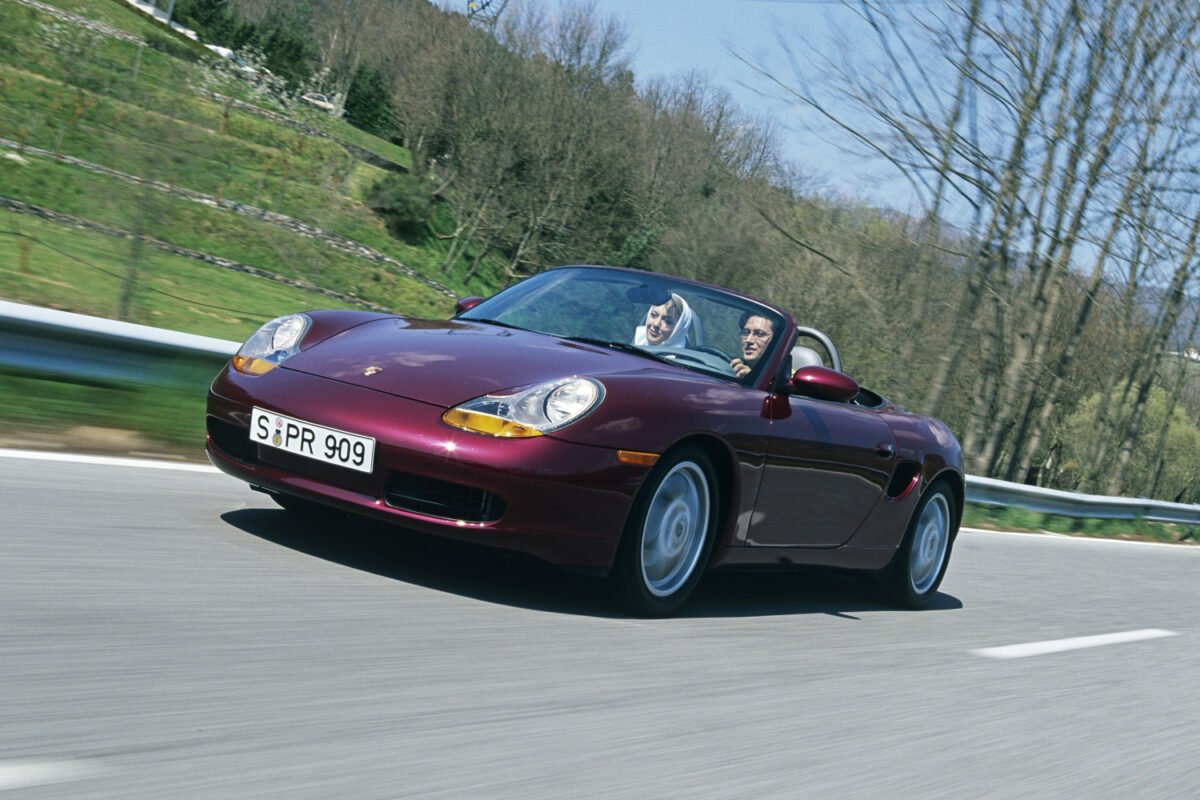
Image by Porsche