How Porsche Engineered the Lightest 992
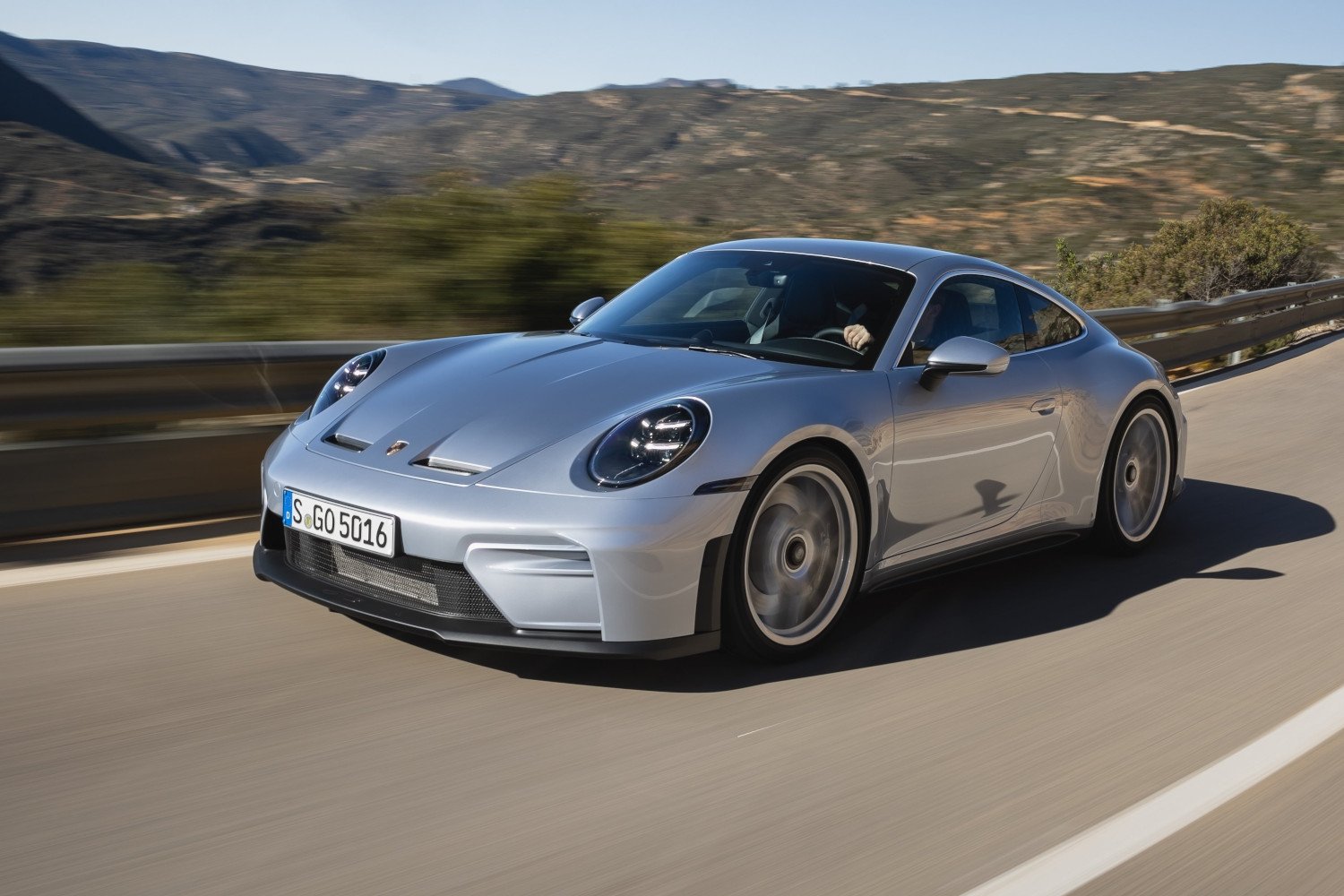
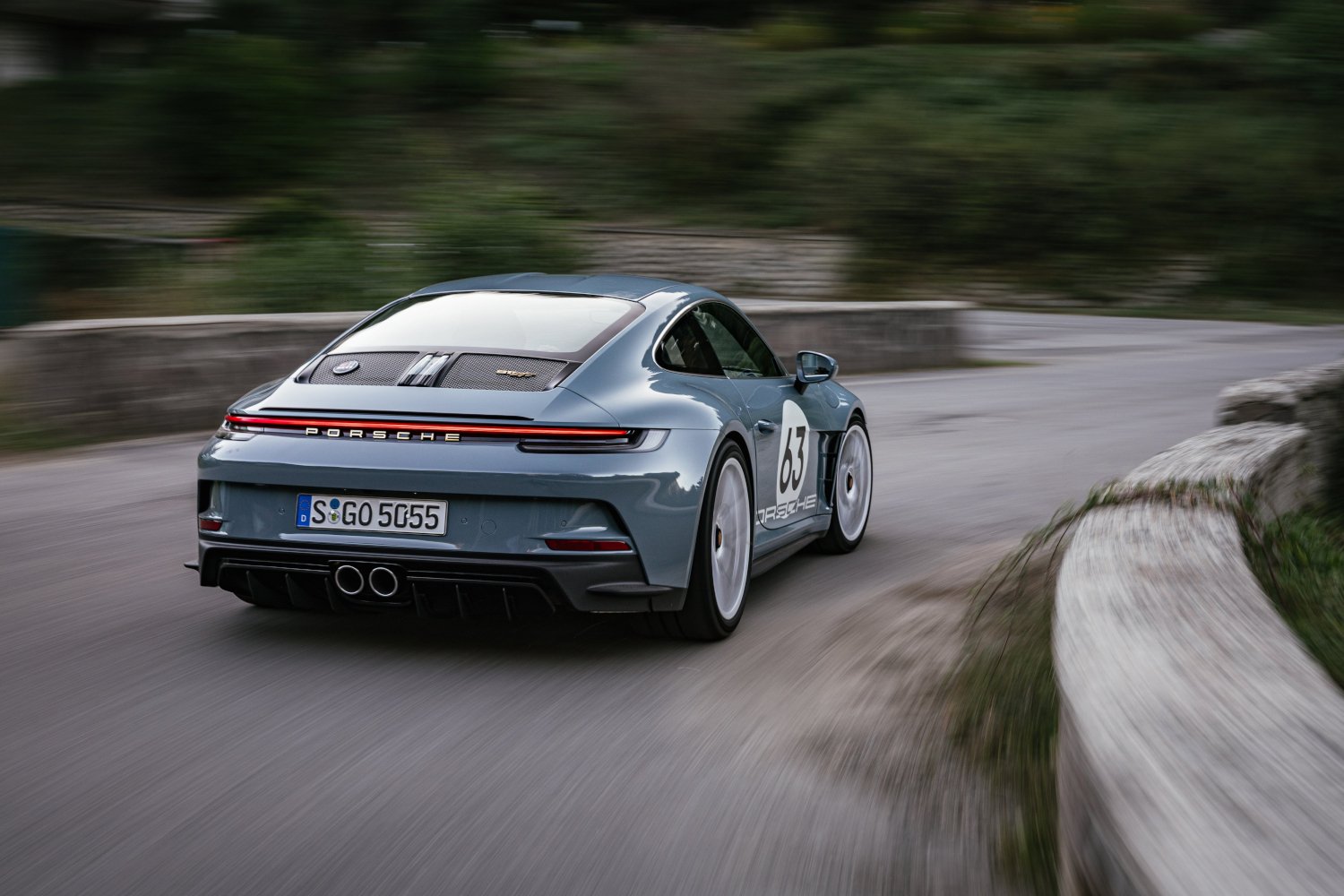
The Porsche 911 S/T achieves its particularly agile and direct handling through consistent lightweight design. The kerb weight (DIN) of the car is just 1,380 kg. So, the 911 S/T is the lightest of the 992 generation. But how Porsche engineered the lightest version of the 992 generation? Let’s find out.
The Lightest 992
The car’s weight has a significant influence on the driving experience. Every gram saved does not need to be accelerated, braked or steered. For the Porsche engineers, lightweight design was therefore paramount in the development of the Porsche 911 S/T. The body of the 911 S/T saves weight through the use of carbon fibre-reinforced plastic (CFRP) components. The front bonnet, the roof, the front wings and the doors are made of of this lightweight material, as are the roll cage, rear anti-roll bar and shear panel.
The CFRP front bonnet of the 911 S/T was adopted from the 911 GT3 Touring. The CFRP doors, borrowed from the 911 GT3 RS, are even lighter than the lightweight aluminium doors on other 911 models. The rear anti-roll bar is made of CFRP, because it’s lighter than steel. In the shear panel, the CFRP is used to add stiffness between the axle pivot points and the floorpan. Porsche also equipped the 911 S/T with magnesium wheels and carbon ceramic brakes (PCCB) as standard. In addition, the rear-wheel steering was deleted.
Reduced Insulation
The amount of insulation was reduced in order to shave off weight. Many of the weight-reduction measures have a long history in the 911. The windows are made of thin glass, similar to the windscreen in the 1967 Porsche 911 R. The door handles are replaced by distinctive loops, which Porsche introduced in the 911 Carrera RS 2.7 in 1972. And as with the 911 Carrera RS of the 993 series, a lightweight starter battery is fitted. In the 911 S/T, the lithium-ion “track” battery has a capacity of 40 Ah and weighs only 9.5 kg.
In the 911 S/T, particular attention was given to reducing the rotating masses around the crankshaft drive in the boxer engine. This allowed engineers to enhance the responsiveness. A lightweight clutch, based on the double-disc principle, was developed specifically for the 911 S/T. In combination with the standard single-mass flywheel, the weight of the components positioned directly on the crankshaft was reduced by 10.5 kg. This, in turn, made the powertrain more responsive. Coupled with the six-speed manual transmission, the result is an incomparably active, thrilling driving experience.
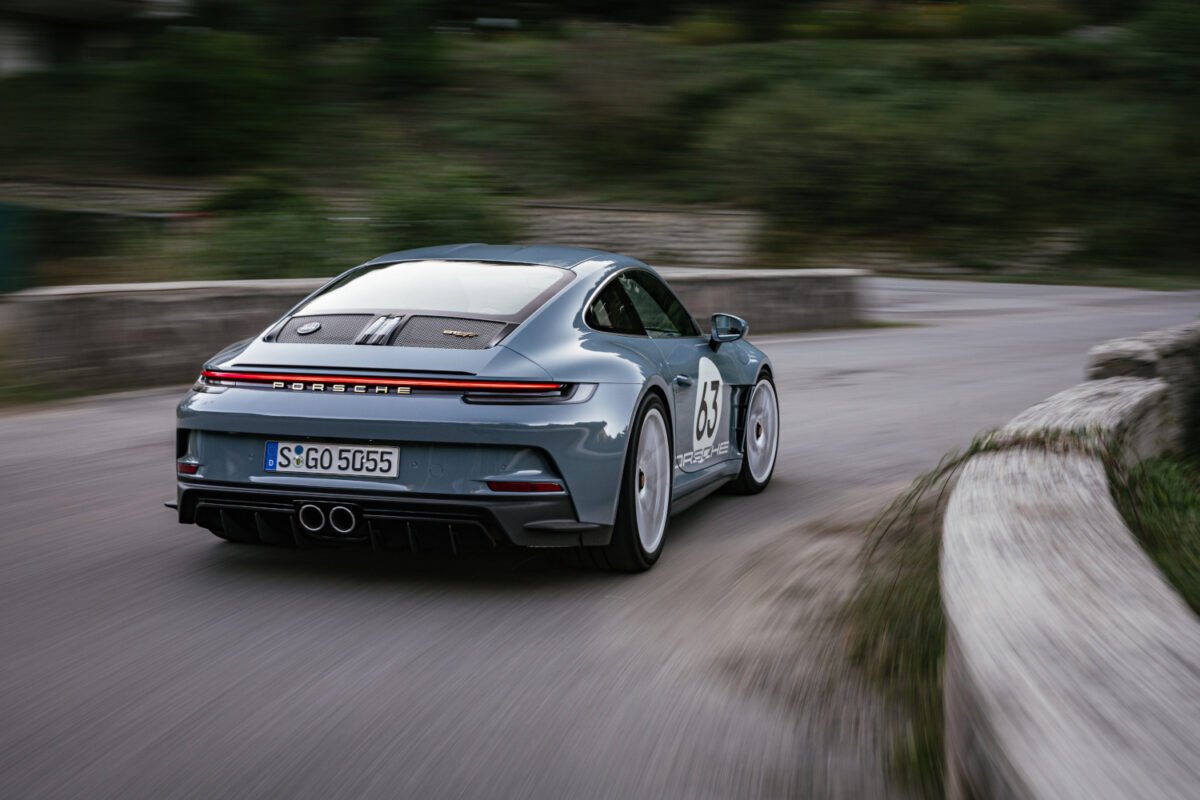
Image by Porsche