Who Designed the Porsche 911?
The Porsche 911 is an automotive icon. And big part of its legend is its timeless design. The 911 has grown and become more modern over the years, but regardless of the generation, you can always recognize it as a 911. But who designed the original Porsche 911?
Designing a New Porsche
The story of the Porsche 911 began in the 1950s. Porsche’s first production model, the Porsche 356 needed a successor. But what kind of a car should it be? During the early development phase, there was a great deal of uncertainty about the design of the new model.
Customers loved the Porsche 356, but they wanted more space and comfort. Porsche’s Sales Department’s wish was; “Retain previous Porsche line. Not a fundamentally new car. Sporty character”. So, what Porsche needed was an evolution, not a revolution.
Erwin Komenda, who was largely responsible for the design of the 356, created one of the first designs for a new model. Komenda thought that it should closely resemble its predecessor. Just be a bit more spacious and comfortable. However, Ferry Porsche disagreed. He thought that Komenda’s design, based on the 356, wasn’t modern enough.
At the time, Porsche didn’t have an actual design department of its own. But that didn’t mean Porsche had a shortage of designs. Many well-known engineers and designers had sent their proposals to Porsche. One of them was Albrecht Goertz, who had created the stunning BMW 507. Goertz was highly respected throughout Europe. Goertz created a design for Porsche, but Ferry considered that it was “a bit too American”. “It was a beautiful Goertz, but not a Porsche”, as Ferry put it.
Who Designed the Porsche 911?
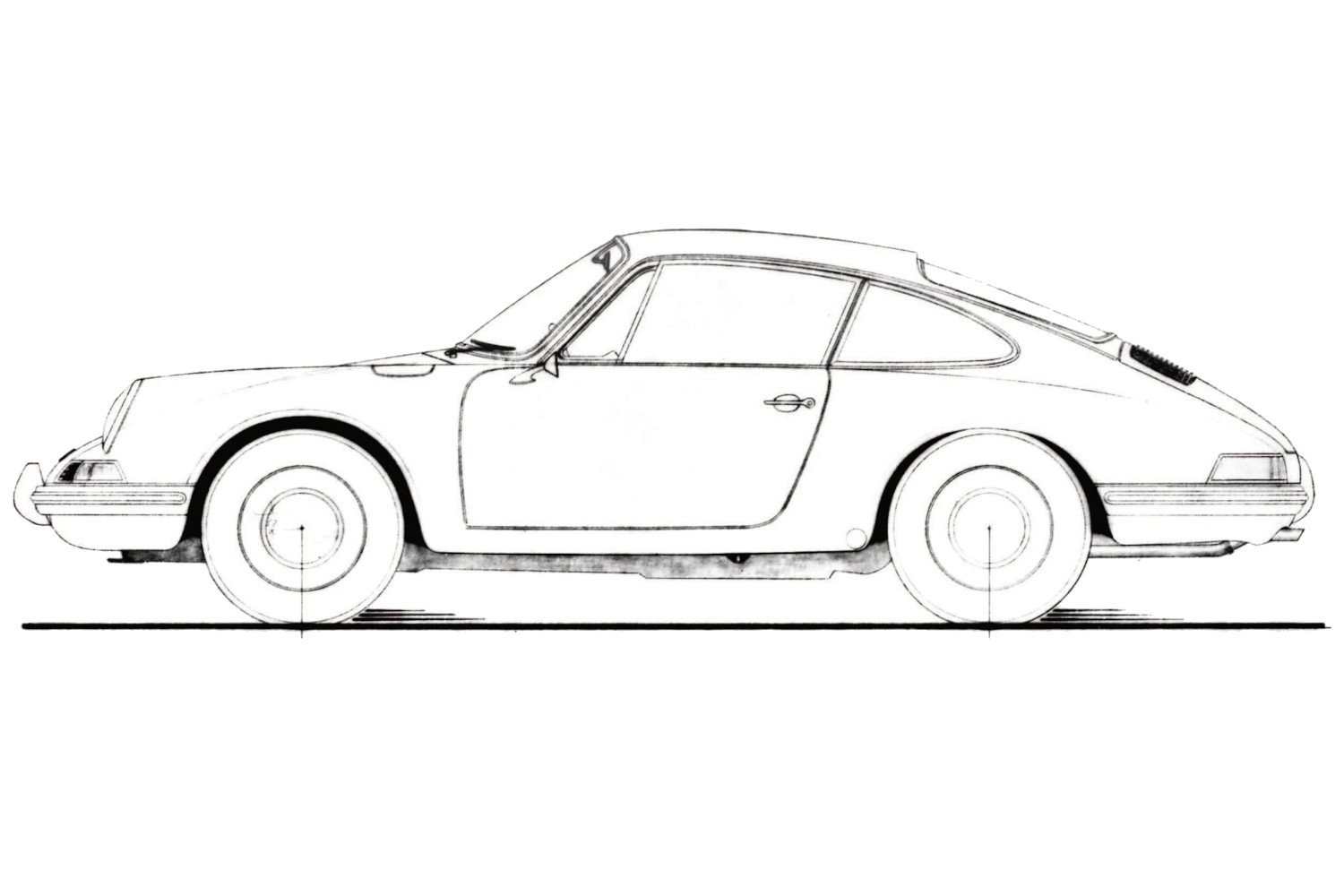
Ferry Porsche’s son, Ferdinand Alexander “Butzi” Porsche (known also as F.A.) had joined the company in 1958. Among other design assignments, F.A. also started to work on a new car. He though the new Porsche model should be sporty above all. So, after several design studies, F.A. and his team created a design of a fastback with a 2+2 seating arrangement.
Ferry, Komenda, F.A. and others had a discussion about the rear seats. Should it be more comfortable four-seater, or sportier 2+2. And although Komenda were in favor of a more spacious four-seater model, Ferry loved the design of the fastback. And there the decision was made. From that moment on, development work continued on the 2+2 version.
The design of the Porsche 911 was a team effort. The final version combined the ideas of many designers. And although changes to the engine, suspension, transmission, and interior continued even after the first prototype was shown, the body design completed by F.A.’s team in December 1961 was the foundation on which all further development of the 911 would be based.
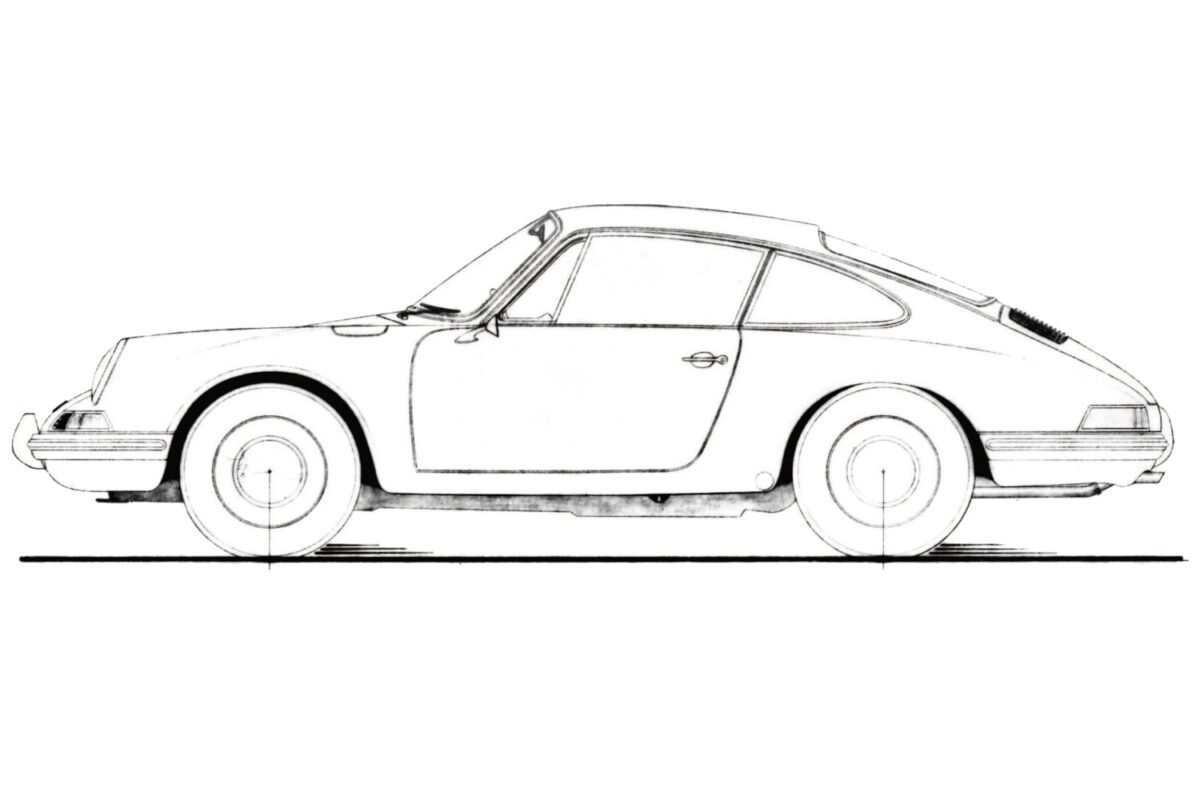
Image by Porsche