Skip to content

Menu

  • Porsche 911
    • 911 (996) 1997-2005
    • 911 (997) 2004-2012
    • 911 (991) 2011-2019
    • 911 (992) 2018-
  • Porsche 718
    • Boxster (987) 2005-2011
    • Boxster (981) 2012-2016
    • Boxster (982) 2016-
    • Cayman (987) 2006-2012
    • Cayman (981) 2012-2016
    • Cayman (982) 2016-
  • History
    • 914 (1970-1976)
    • 924 (1976-1988)
    • 944
    • 928
    • Carrera GT (2003-2006)
    • 918 Spyder (2013-2015)
  • Garage
    • Car Care
    • Wheels and Tyres
    • Tech Corner
    • Porsche Engines
    • Technical Data
  • Car Dreams
  • Style
    • Timepieces
  • About
    • Privacy Policy
2025 Porsche 911 Carrera GTS exterior

Porsche 911 Models

  • Porsche 911 Carrera GTS

Copyright Carrera Fever 2025 | Theme by ThemeinProgress | Proudly powered by WordPress

NEW
  • Race Car: Porsche 911 GT3 R (2026)
  • 2019 Porsche 935 Specs
  • 2020 Porsche 911 Carrera 4S MT (992.1) Specs
  • Carrara White Metallic 2019 Porsche 911 Carrera S
  • 2019 Porsche 911 Carrera S – 10 Fast Facts
Carrera FeverYour Daily Dose of the Porsche Sports Cars
  • Porsche 911
    • 911 (996) 1997-2005
    • 911 (997) 2004-2012
    • 911 (991) 2011-2019
    • 911 (992) 2018-
  • Porsche 718
    • Boxster (987) 2005-2011
    • Boxster (981) 2012-2016
    • Boxster (982) 2016-
    • Cayman (987) 2006-2012
    • Cayman (981) 2012-2016
    • Cayman (982) 2016-
  • History
    • 914 (1970-1976)
    • 924 (1976-1988)
    • 944
    • 928
    • Carrera GT (2003-2006)
    • 918 Spyder (2013-2015)
  • Garage
    • Car Care
    • Wheels and Tyres
    • Tech Corner
    • Porsche Engines
    • Technical Data
  • Car Dreams
  • Style
    • Timepieces
  • About
    • Privacy Policy
  • You are here :
  • Home
  • Porsche 911
  • The Story of the Porsche 911
February 26, 2025

The Story of the Porsche 911

Porsche 911

The story of the Porsche 911 began in the late 1950s. At the time, Porsche was still relatively new car manufacturer. The first Porsche production model, the 356 was unveiled in 1948. The 356 was a success, but it was aging and reaching the limits of its capabilities.

Idea of a New Sports Car

The new car had big shoes to fill. It had to be as good, or preferably better than the 356 in all areas. Customers wanted more luxury and comfort, and also more space for passengers and luggage. So the car needed to be larger and more powerful, but also as exciting to drive as the 356.

Deciding on the shape of the car was part of the body development process. Porsche didn’t have its own design department at the time, but many engineers and well-known designers had sent their proposals to Porsche. However, none of these got Ferry Porsche’s approval. After many different design studies, including a four-seater, Ferry’s son Ferdinand Alexander “Butzi” Porsche and his team created the historic design for the car.

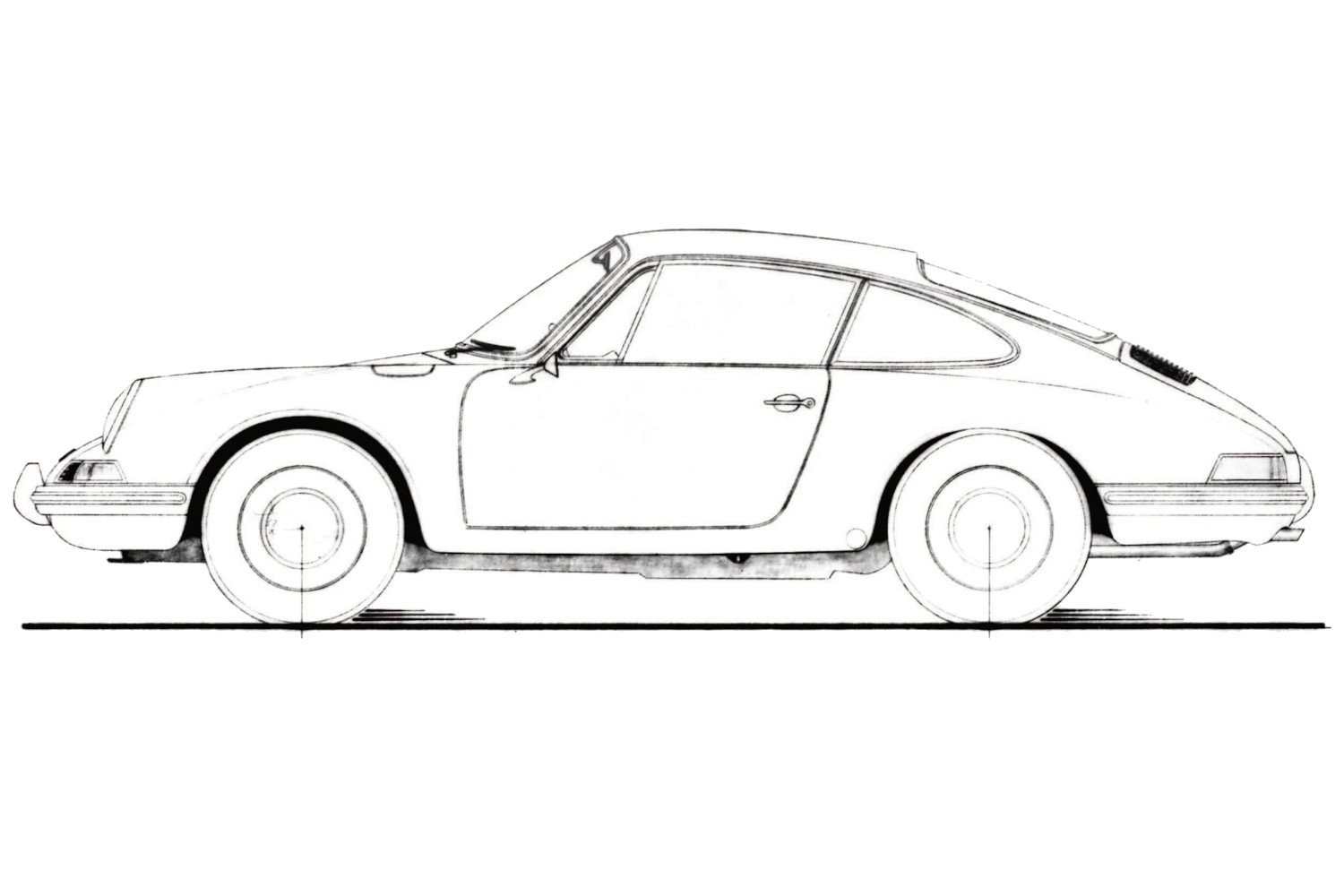
The new car was a 2+2 seater with a hatchback on a unibody frame. Characteristic style elements included short overhangs, the distinctive headlight “tunnels” and the flat bonnet between them, and the large rear window. Like in the 356, the luggage compartment was at the front and the flat engine was situated at the rear. And to make the luggage compartment more spacious, the designers planned space-saving McPherson suspension at the front and the outdated swing axle was replaced by a semi-trailing arm suspension at the rear.

Flat-Six at the Rear

The new model was powered by a completely new six-cylinder flat engine with eight crankshaft bearings. Dry-sump lubrication ensured an adequate supply of oil, even at high longitudinal and lateral acceleration. One camshaft rotated in each of the cylinder heads, driven by intermediate shafts and a chain. With a compression ratio of 9:1, the 2.0-litre engine delivered maximum power output of 130 hp at 6,200 rpm. A newly developed five-speed transmission was used to transmit power to the rear wheels.

On the exhaust side, Porsche borrowed a tried-and-tested approach from the 356 in the shape of vehicle heating via heat exchangers. The heating pipes were routed into the sill boxes, with vents at the height of the footwell. The rear window and windscreen were supplied with hot air directly by defroster vents. In order to prevent any reduction in comfort compared to water-cooled vehicles manufactured by competitors, additional heating was provided as standard in the front of the 901.

Icon is Born

Porsche celebrated the world premiere of the 901 at the Frankfurt Motor Show on September 12 in 1963. However, this was only a pre-series vehicle. It was not until next spring when the new model could be presented to industry professionals. The series production started on September 14, 1964. The first vehicles were kept by the factory or used as exhibition vehicles.

One of them was sent to the Paris Motor Show. Everything seemed fine, when Porsche had an unexpected problem; the name of the car. Peugeot stated that they had been using three-digit numbers with a zero in the middle since 1929 and therefore owned the legal rights to all similar number sequences in France. Porsche’s sales management team suggested that the name should be changed from 901 to 911.

On October 22, 1964, Ferry Porsche gave the order for the name to be changed. From this day on, the 901 was called the 911. The icon was born.

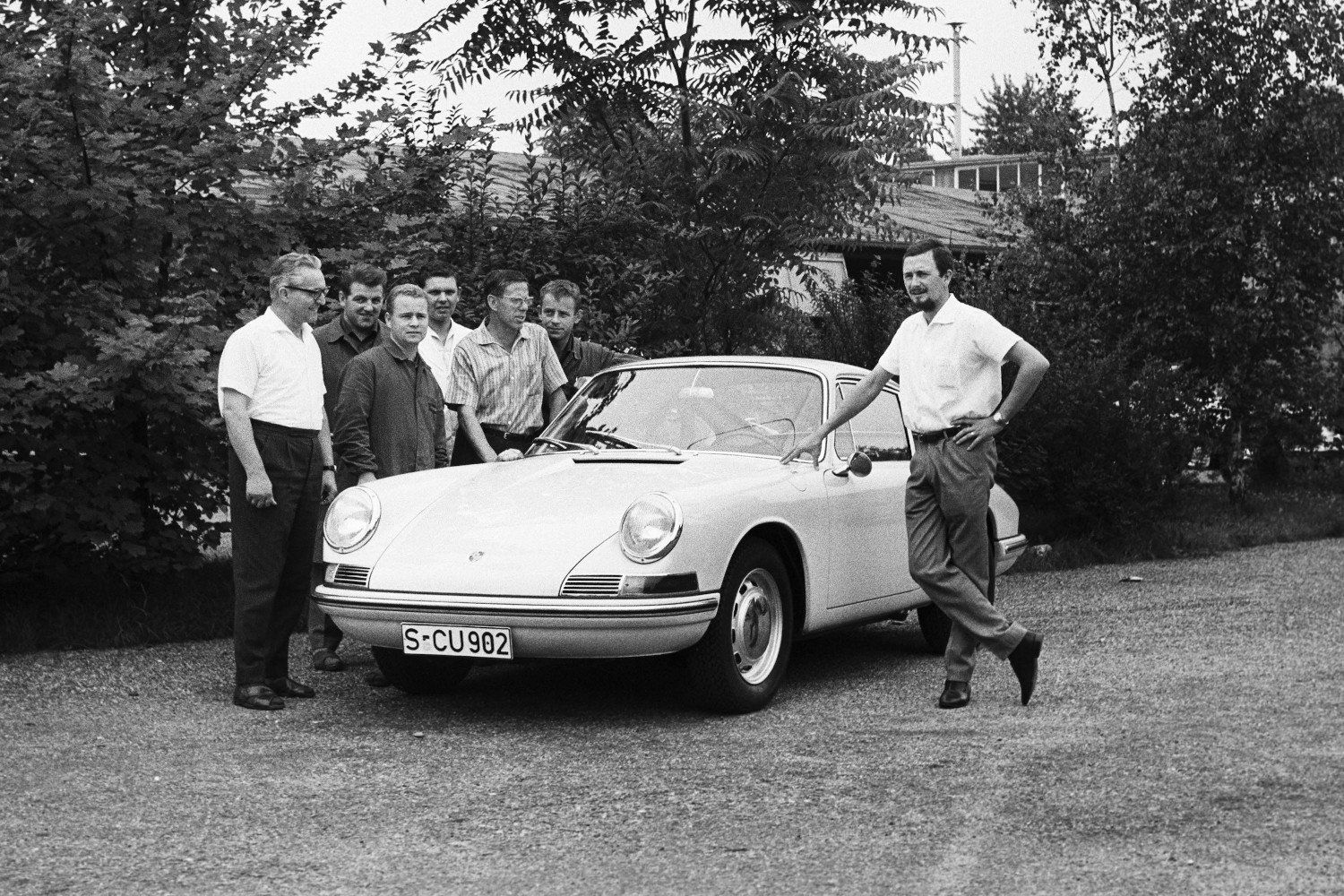
Porsche 901 with Heinrich Klie, Ernst Bolt, Hans Ploch, Hans Springmann and Ferdinand Alexander Porsche

You may also like

2020 Porsche 911 Carrera 4S MT (992.1) Specs

Carrara White Metallic 2019 Porsche 911 Carrera S

2019 Porsche 911 Carrera S – 10 Fast Facts

Tags: Porsche 911

Latest Additions

  • 2026 Porsche 911 GT3 R front
    Race Car: Porsche 911 GT3 R (2026)
    Porsche introduced a further refined version of the successful Porsche 911 GT3 R race car for the 2026 season
  • 2019 Porsche 935 on the track front
    2019 Porsche 935 Specs
    Here are the technical specifications of the 2019 Porsche 935 race car based on the 991.2 generation Porsche 911 GT2 RS
  • 2020 Porsche 911 Carrera 4S MT (992.1) Specs
    Here are the technical specifications of the 2020 Porsche 911 Carrera 4S with the 7-speed manual transmission
  • Carrara White Metallic 2019 Porsche 911 Carrera S
    How cool is a 992.1-generation Porsche 911 Carrera S in white? Check these images of a Carrara White Metallic 2019 Porsche 911 Carrera S
  • 2019 Porsche 911 Carrera S on the road front
    2019 Porsche 911 Carrera S – 10 Fast Facts
    The eight generation Porsche 911, known as the type 992, was unveiled in 2018. Here are 10 fast facts about the 2019 Porsche 911 Carrera S
  • 2026 Porsche 911 Turbo S (992.2) Specs
    Here are the technical specifications of the 2026 Porsche 911 Turbo S Coupe (992.2) hybrid supercar
  • 2026 Porsche 911 Turbo S Electric Turbocharger
    Porsche 911 Turbo S (992.2) with eTurbo Technology
    The Porsche 911 Turbo S is equipped with eTurbo technology. eTurbos are equipped with an integrated electric motor
  • Guards Red 2025 Porsche 911 Carrera Cabriolet
    What do you think about a 992.2-generation 911 Carrera Cabriolet in Guards Red? Would this be a real dream car?
  • 2016 Porsche 911 Carrera
    Porsche 911 (991.2) Option Codes (MY2017)
    Here are the Porsche 911 (991.2) option codes with descriptions from model year 2017. Options list may vary depending on the year/country
  • 2019 Porsche 935 on the track
    Race Car: Porsche 935 (2019)
    The limited-edition 2019 Porsche 935 clubsport racer pays tribute to the legendary Porsche 935/78 Le Mans race car

Fast Facts Porsche 718 Boxster (982) Porsche 718 Cayman (982) Porsche 911 Porsche 911 (991.1) Porsche 911 (992.1) Porsche 911 (992.2) Porsche 911 (996) Porsche 911 Carrera GTS Porsche 911 GT3 Porsche 911 Race Cars Porsche 911 Turbo Porsche 911 Turbo S Porsche Boxster Porsche Cayman Porsche Concept Car Porsche Design Porsche Engines Porsche Race Cars Technical Specification

Copyright Carrera Fever 2025 | Theme by ThemeinProgress | Proudly powered by WordPress