1.7-Litre – The Porsche 914 Engine (1970)
The Porsche 914 was introduced in 1969 as a collaborative project between Porsche and Volkswagen. The entry level model, also known as the VW-Porsche 914/4, is powered by a 1.7-litre 4-cylinder engine.
The Porsche 914 Engine
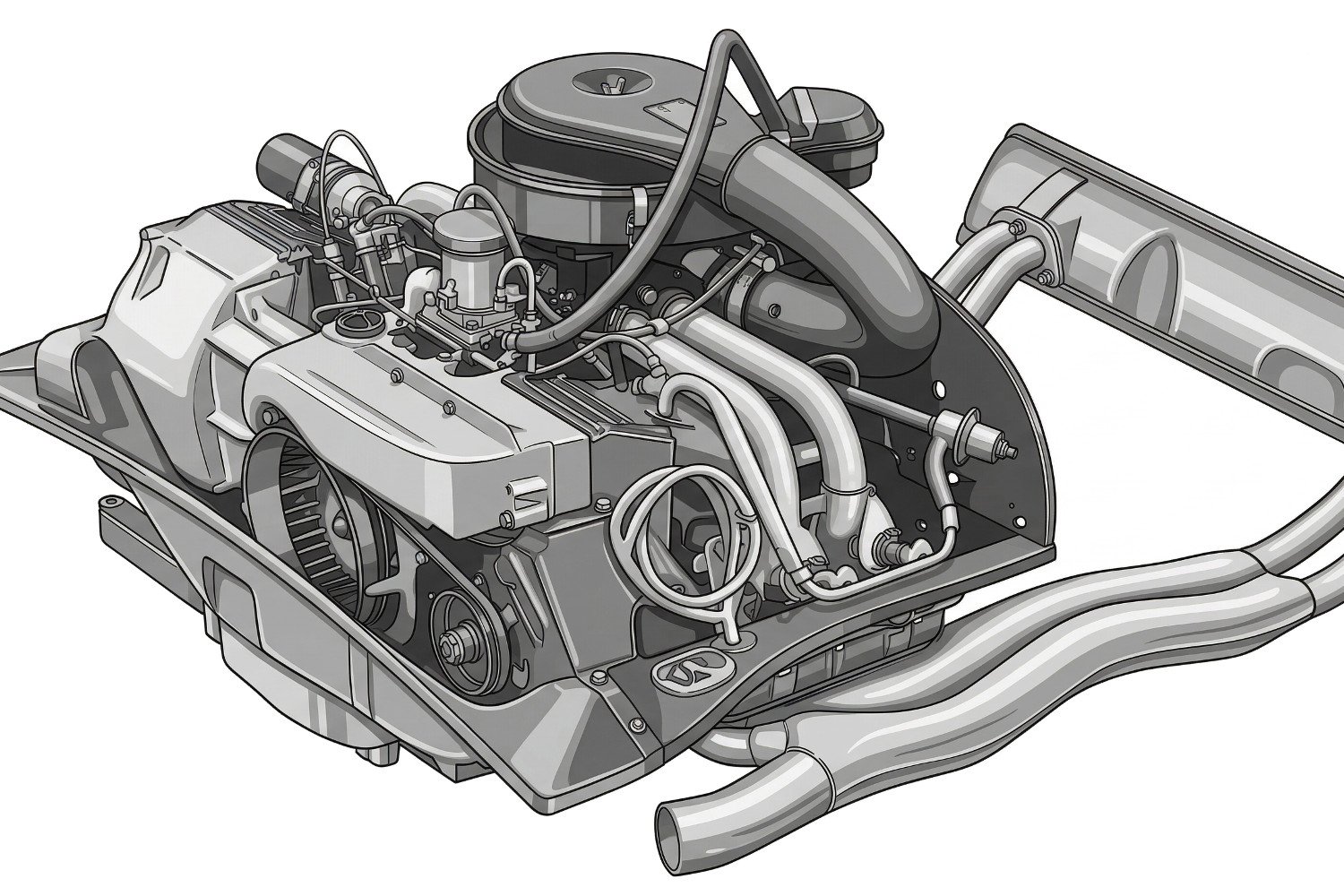
The base model Porsche 914 has a four-cylinder air-cooled horizontally opposed engine with Bosch electronically controlled fuel injection. It is installed in the mid-engine position in front of the rear axle, and combined with the clutch, five-speed gearbox and final drive to form a single unit.
On each side, a single light alloy cylinder head is bolted onto a pair of special gray cast iron cylinder barrels. The parallel overhead valves are driven by pushrods and rockers from a central camshaft. The drive to the camshaft is by helical pinions from the engine’s crankshaft.
The engine is lubricated by pressure oil circulation, with a gear-type pump driven from the camshaft. The oil is purified and cooled by a full-flow oil filter and a plate-type oil cooler mounted in the airflow from the blower. The radial cooling air blower is mounted directly on the end of the crankshaft. Airflow is controlled automatically by a thermostat. The maximum flow rate at 4600 rpm is approximately 800 liters (14.1 cu. ft) per minute.
The oversquare 1.7-litre engine developed about 80 HP (DIN) at 4900 rpm. The fuel consumption, measured in accordance with the DIN standard, was about 8 litres per 100 km.
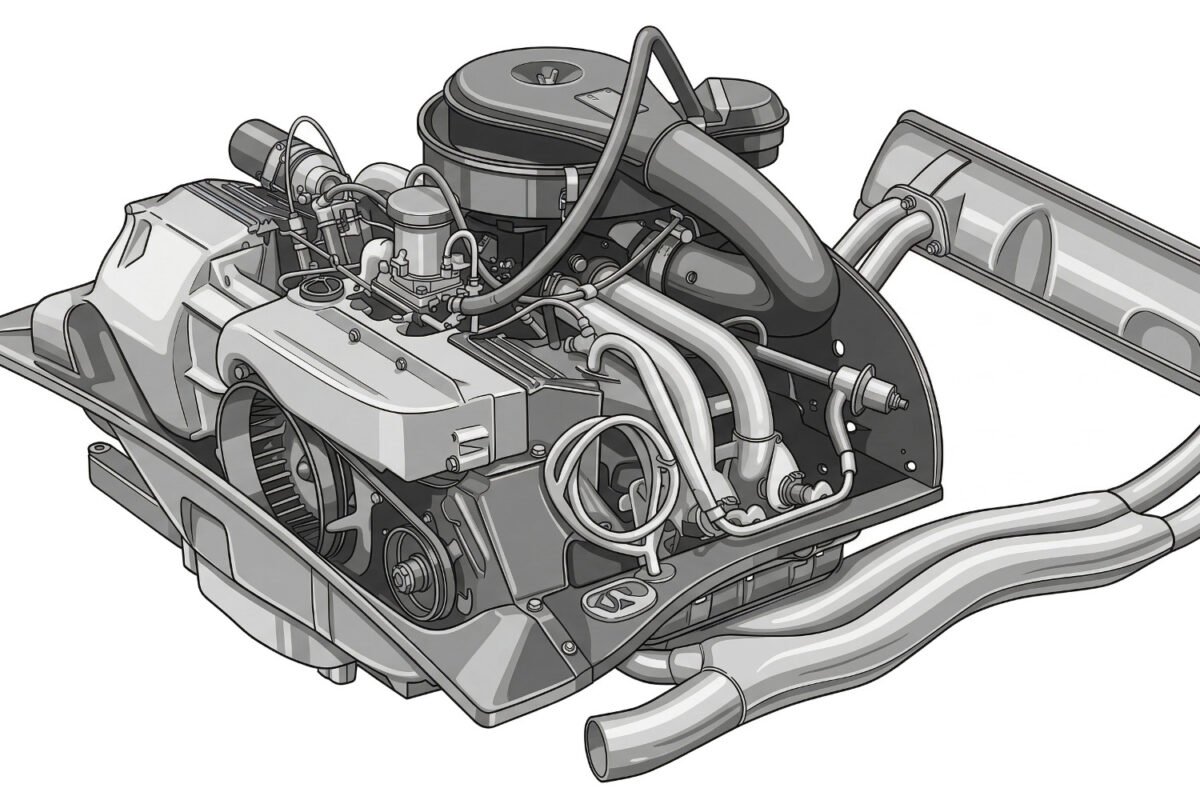
Drawing of the 1970 Porsche 914 engine