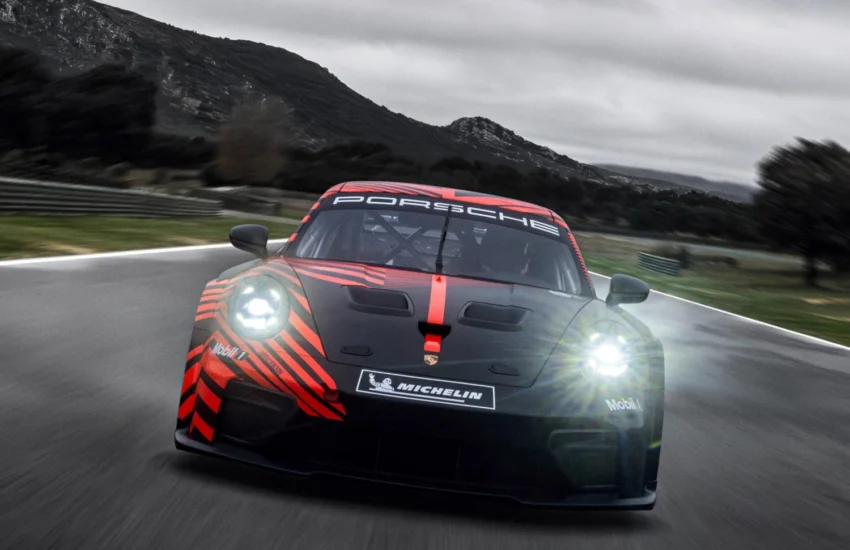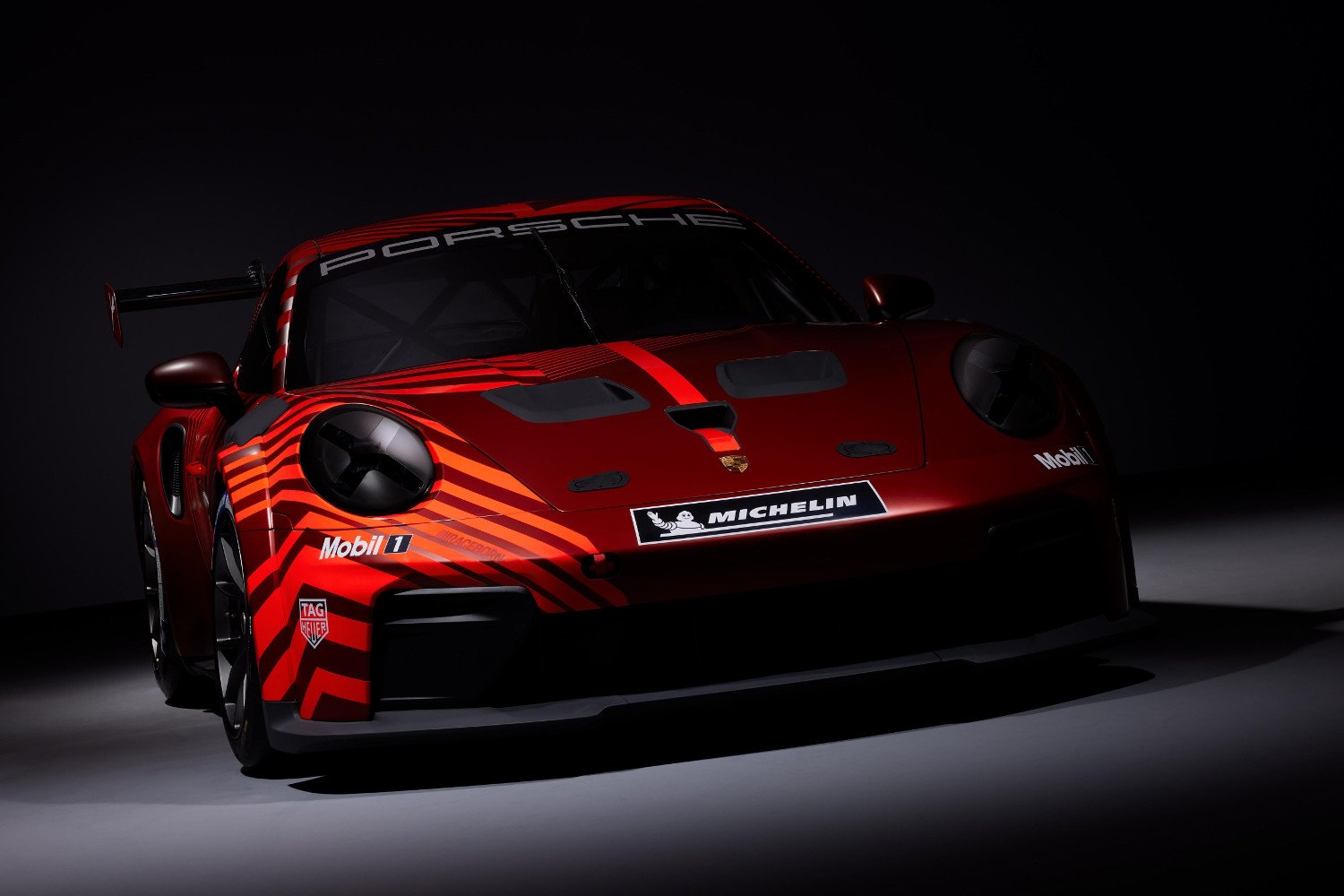
Race Car: Porsche 911 Cup (2026)
The new racing car based on the 911 for Porsche’s one-make cups and series is now officially called the Porsche 911 Cup. This new model will line up on the grid from the start of the 2026 season. With this, the Stuttgart-based sports car manufacturer is streamlining and standardising the naming of its customer racing vehicles. From now on, only cars intended for open-brand racing series or specific segments will carry the “GT” suffix combined with a number in their designation.
Porsche 911 Cup
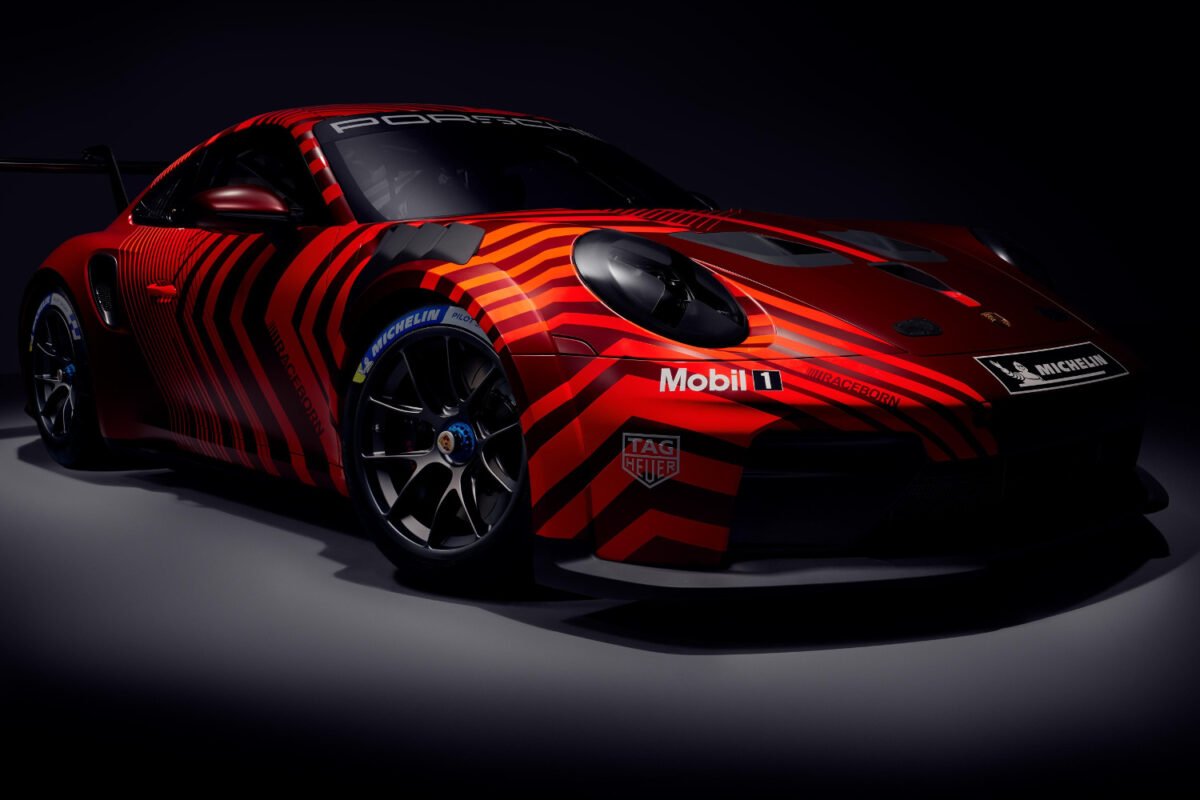
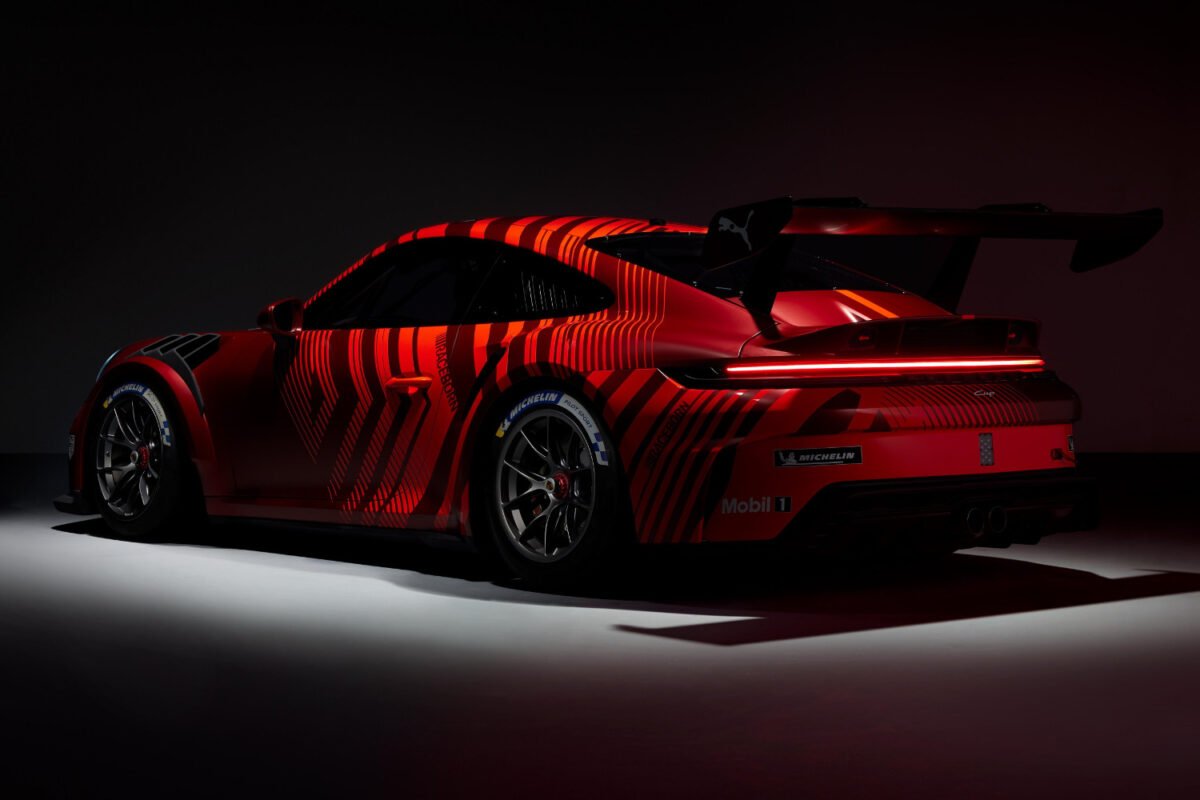
The 911 Cup already sets itself apart visually from its predecessor, most notably with a front end that now reflects the design of the 992.2-generation 911 GT3. The front spoiler lip is now made up of three separate parts, allowing only the damaged sections to be replaced after contact, which also helps lower packaging and shipping costs for spare parts. The removal of the daytime running lights serves a similar purpose: in the event of a collision, they can no longer damage the radiators behind them, nor do they require replacement afterwards.
The fenders feature integrated louvre vents, which aid airflow through the wheel arches and enhance aerodynamic downforce on the front axle. The same effect is achieved by the aerodynamically optimised underbody, which positively influences the car’s driving dynamics. So-called turning vanes, located behind the front wheel arches, further improve airflow along the front end. The interaction of these elements results in a more responsive front axle, particularly at high speeds, allowing the driver to position the race car with greater precision ahead of each corner.
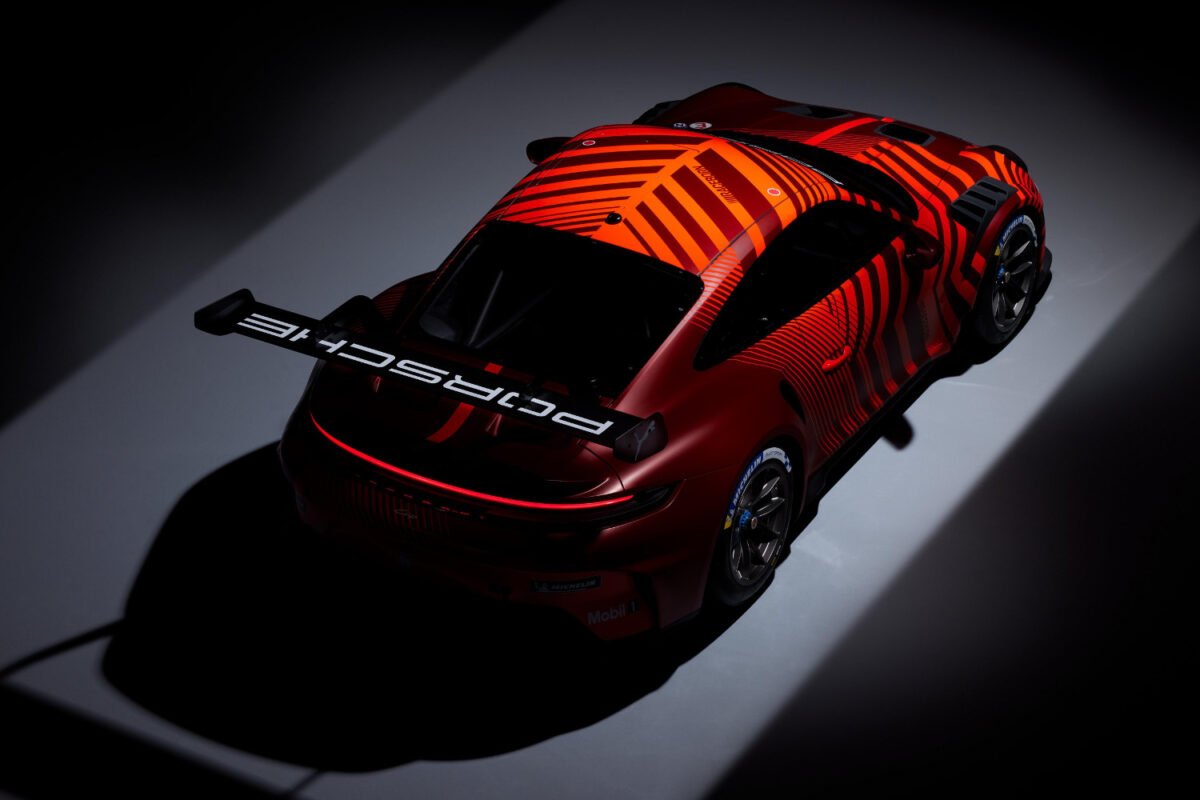
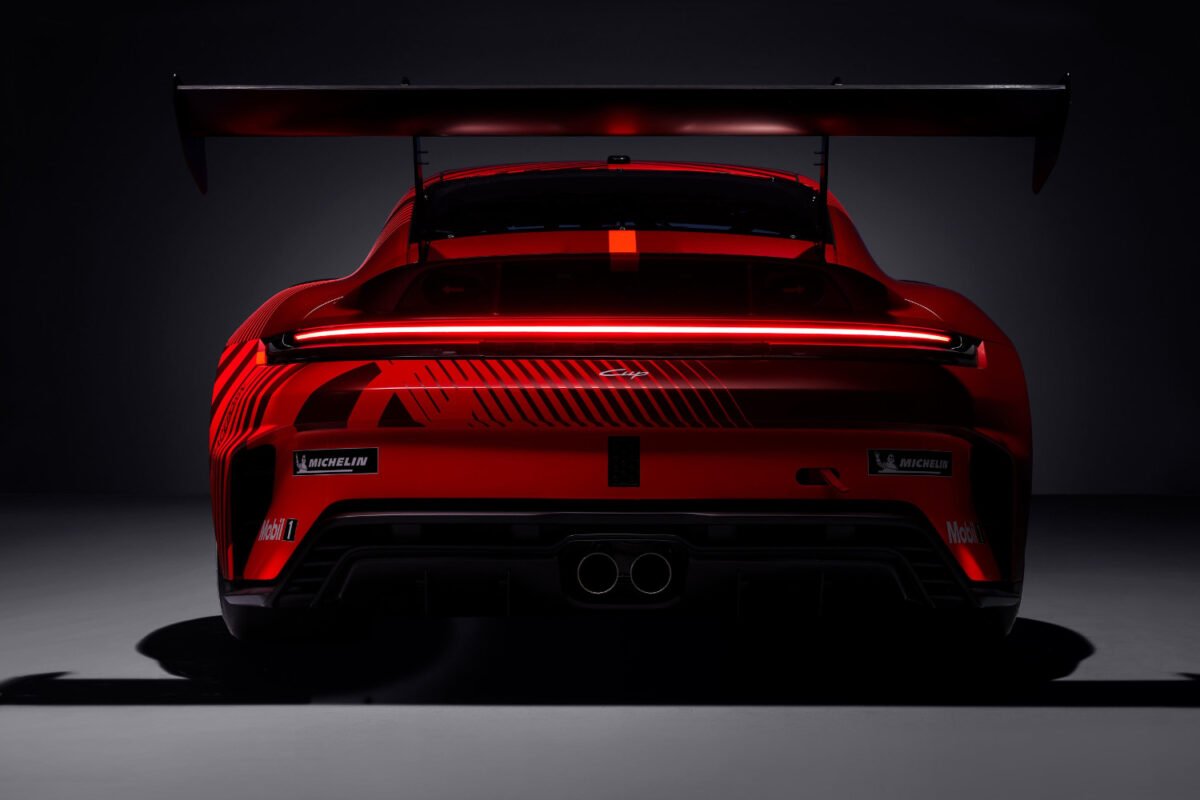
The more aggressively styled rear end of the new 911 Cup has undergone a complete redesign. The swan-neck rear wing features a revised connection to the wing supports, making position adjustment and handling easier. The engine compartment cover has also been thoroughly reworked. Like almost all body components (including the doors) is made from recycled carbon fibre fleece combined with bio-based epoxy resin. For example, off-cuts from other manufacturing processes are repurposed to produce the fleece, a measure that contributes, amongst other benefits, to stabilising spare parts pricing.
Racing Engine
The water-cooled, high-revving six-cylinder engine continues to rely on natural aspiration. The visceral sounding 4.0-litre boxer engine remains based on the unit used in the Porsche 911 GT3. In its latest racing version, now delivering 382 kW (520 PS), it incorporates additional components from the series production engine, including flow optimised individual throttle valves and camshafts with extended valve opening times. This design eliminates the need for a centrally positioned throttle valve, which in turn allows for the installation of an air restrictor, a requirement for competing in other motor racing championships.
Despite the ten PS increase, the engine’s service life remains unchanged. It only requires an overhaul after 100 hours of track time. To comply with varying noise regulations depending on the racing series, circuit, and local regulations, three different exhaust systems are available.
A more robust four-disc sintered metal racing clutch now handles power transmission to the sequential six-speed dog gearbox. This upgrade allows the engine speed, previously limited to 6,500 rpm during a standing start, to be increased, further enhancing the acoustic theatrics at the beginning of a race. An automatic engine restart function has also been introduced. This activates as soon as the driver depresses the clutch pedal after an accidental stall. Additionally, a new stroboscope function on the brake lights now alerts following drivers, particularly during the start phase. This replaces the previous use of the hazard warning lights for this safety application.
Brakes
The braking system has undergone a comprehensive upgrade. The front axle now features 380-millimetre discs, with their cross-section increased from 32 to 35 millimetres. This change allows for larger cooling channels for self-ventilation, improving heat dissipation. The background to this development: By relocating the central water cooler to the rear of the boot, cooling air can now be directed to the brakes through the central front section.
Additionally, the outer diameter of the brake disc hat has been reduced, increasing the friction surface between the disc and brake pad. This results in more efficient deceleration thanks to wider brake pads, improved durability during long-distance races, and a significantly extended service life for the individual components.
The Bosch M5 racing ABS will now be fitted ex-works in all 911 Cup cars. It features enhanced data processing capabilities to interpret input from the new acceleration sensor, which offers additional signal detection. The advanced software can also alert the driver in the event of a leak in either of the two brake circuits. Additionally, the brake fluid reservoir has been enlarged, making it suitable for long-distance racing.
Adjusted steering stops enable the electronically assisted power steering to achieve a tighter turning radius, making manoeuvring through narrow city streets easier. The increased steering lock also allows drivers to counteract oversteer in the 911 more effectively.
Popular Racing Car
The 911 Cup is produced alongside the series-production cars at Porsche’s main plant in Zuffenhausen. Since production began at the end of 2020, Porsche Motorsport has built 1,130 units of the current 911 GT3 Cup. To date, a total of 5,381 Porsche 911 vehicles has been produced as one-make racing cars.
Images by Porsche